
Programs & services
Seven services, one organization. Each one below explains what it includes, who it is for, and how to get started. Most people arrive needing one thing and end up connected to two or three. If you are not sure where you fit, call (623) 555-0142 and we will help you find the right starting point.
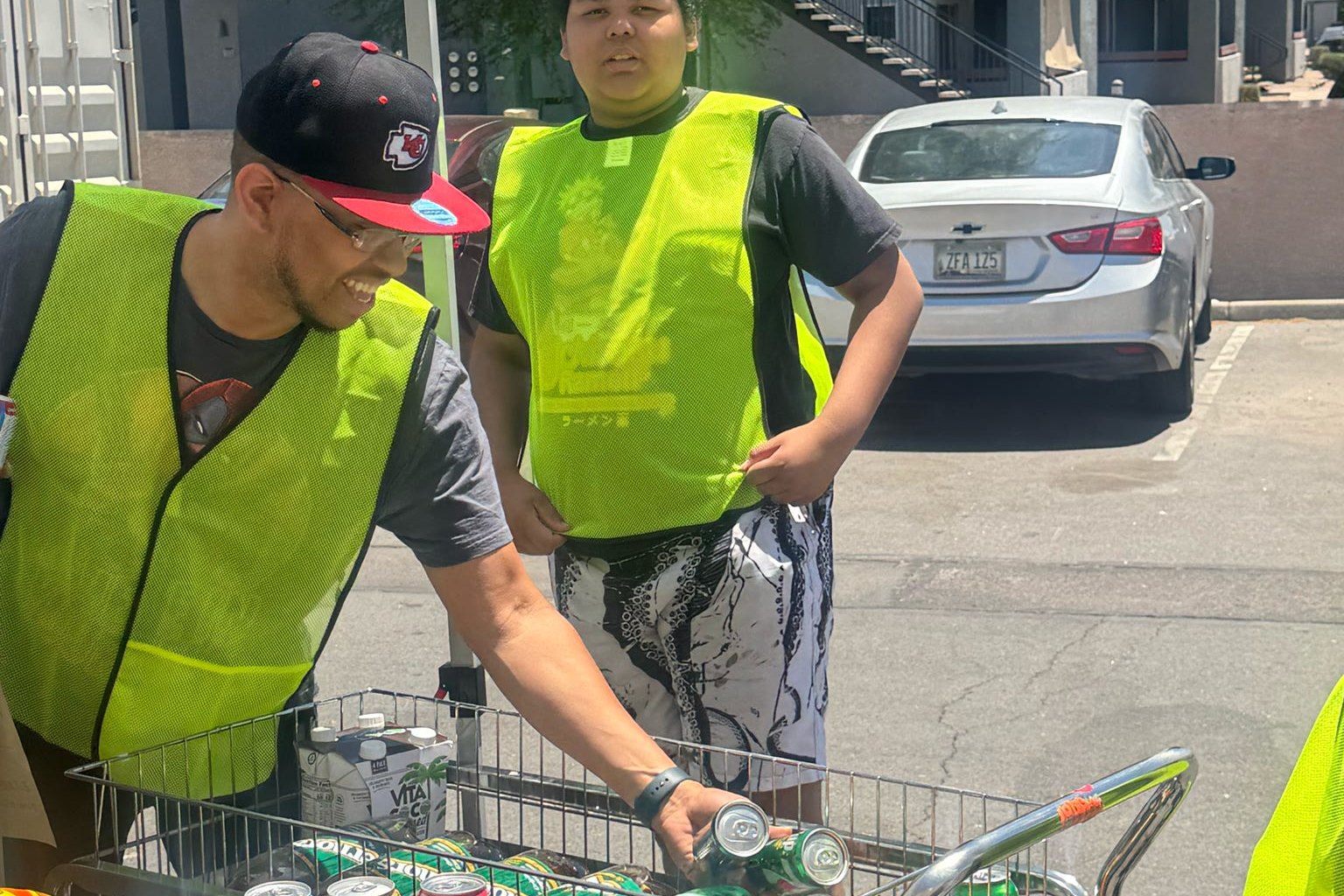
Food Pantry & Culinary Kitchen
Fresh groceries, hot meals, and real cooking skills, grown partly in our own urban farm.
Walk in for groceries and you will find more than food. Our pantry pairs fresh produce from our urban agriculture program with a teaching kitchen where participants learn to cook, budget, and (for many) discover a career path in food service.
Pantry hours
Glendale: Wednesdays 10:00 am – 2:00 pm · Saturdays 9:00 am – 12:00 pm
Tucson: Thursdays 10:00 am – 2:00 pm
What’s included
- Weekly grocery distribution in Glendale and Tucson; no appointment needed
- Fresh produce harvested from our urban agriculture plots
- Hands-on culinary kitchen classes: cooking, nutrition, and food-safety skills
- A pathway into food-service work for participants who want it
How to start
- 1 Check the pantry hours for the location nearest you, below.
- 2 Come during distribution hours; bring an ID with your address if you have one. No one is turned away for paperwork.
- 3 Ask the pantry team about culinary kitchen classes happening that month.
Every door opens others
People in this situation usually need these next:
Attendant Care & Habilitation
Support with daily life (at home and in the community) plus respite for the people who care for you.
Attendant care and habilitation help people with disabilities live safely and build skills in their own homes and communities. Our caregivers are trained, background-checked, and matched to the person they support, not rotated at random.
What’s included
- In-home attendant care with daily living activities
- Habilitation: building the skills that make independence possible
- Respite care that gives family caregivers a real break
- Wellness support and coordination with your care team
How to start
- 1 Call us or send the contact form; tell us who you care for and what a good week would look like.
- 2 We walk you through eligibility (including AHCCCS and DDD-funded options) in plain language.
- 3 You meet your caregiver before services begin, and you can request a different match at any time.
Every door opens others
People in this situation usually need these next:
Housing & Independent Living
Adult developmental homes, and the skills to live as independently as each person wants.
Some people thrive in a supported home. Others want their own apartment with just enough support to keep it. We provide both: licensed adult developmental homes and independent-living skills training that follows the person's own goals.
What’s included
- Licensed, family-style adult developmental homes
- Independent-living skills: cooking, money, safety, and self-advocacy
- Roommate and apartment matching based on the person's preferences
- Ongoing check-ins so support adjusts as independence grows
How to start
- 1 Schedule a tour to see our homes and day spaces in person.
- 2 We review housing eligibility and current openings honestly; if there is a wait, we say so.
- 3 A support plan is built around what independence means to the person, not to a program.
Every door opens others
People in this situation usually need these next:
Employment & Vocational Services
Job training, placement, and follow-along support for job seekers and for employers.
Through vocational rehabilitation partnerships and direct employer relationships, we help people with disabilities find real jobs at real wages and stay involved after the first day so the job lasts.
What’s included
- Career exploration, resume building, and interview practice
- Job placement with employers who practice inclusive hiring
- Follow-along coaching on the job for as long as it is useful
- Support for employers: matching, onboarding, and retention help at no cost
How to start
- 1 Reach out through vocational rehabilitation (DES/RSA), your school transition team, or contact us directly.
- 2 We meet to talk about interests, strengths, and the kind of workplace that fits.
- 3 Job search begins with a plan; coaching continues after hire.
Every door opens others
People in this situation usually need these next:
Direct Care Worker Training
Get certified. Get hired. A paid pathway into a care career, open to people with disabilities.
Arizona needs direct care workers, and the people who understand care best are often the ones closest to it. Our Direct Care Worker (DCW) training and CREED program prepare anyone (including people with disabilities) for certification and employment in caregiving.
What’s included
- State-recognized DCW certification coursework
- CREED: our employer-driven training and hiring program
- Job placement with hiring partners after certification
- Accessible instruction and accommodations as standard, not by request
How to start
- 1 Attend an upcoming DCW training info session (see Upcoming on the home page).
- 2 Bring your questions about schedule, pay, and accommodations; we answer them in the first meeting.
- 3 Enroll, certify, and connect with hiring partners.
Every door opens others
People in this situation usually need these next:
Transportation & Community Access
Rides to programs, appointments, and everything in between so a missing ride never cancels a good day.
A job, a doctor's appointment, a day program, a grocery run: all of it depends on getting there. Our transportation program keeps people connected to their services and their community, with drivers trained to support riders with disabilities.
What’s included
- Scheduled rides to day programs, work, and training
- Transportation to medical appointments
- Community access trips: errands, events, and everything else that makes a life
- Wheelchair-accessible vehicles and trained, patient drivers
How to start
- 1 Tell us where you need to go and when; by phone or the contact form.
- 2 We check eligibility and funding options with you.
- 3 Rides are scheduled around your real calendar, not a fixed route.
Every door opens others
People in this situation usually need these next:
Family, Caregiver & Youth Programs
Support for the people doing the supporting and enrichment for youth and families.
Caregiving is skilled work, usually unpaid, and often isolating. Our caregiver support groups, respite navigation, and youth enrichment programs make sure the whole family gets support, not just the family member with a disability.
What’s included
- Monthly caregiver support groups in Glendale and Tucson
- Navigation help: respite, funding, schools, and DDD paperwork
- Youth and family enrichment activities
- Connections to the rest of Brighter View as needs change
How to start
- 1 Check the Upcoming section on the home page for the next support group.
- 2 Come as you are; no referral, no diagnosis required to attend.
- 3 Talk with our family team about what your household actually needs.
Every door opens others
People in this situation usually need these next:
Referring a client?
You can refer someone without a phone call first. Check services and eligibility above, then reach our named referral contact; we answer quickly and tell you honestly whether we have capacity.
Refer Someone